Introduction
The rooftop tent market has been growing rapidly worldwide, driven by the rise of overlanding, road trips, and outdoor lifestyles.
For many entrepreneurs and distributors, this raises an important question:
👉 How do you start a rooftop tent business in your country?
The good news is:
You don’t need a large team or huge investment to get started—but you do need the right strategy and supplier.
In this guide, we’ll walk you through a practical, step-by-step process to help you launch and grow your rooftop tent business in 2026.
Step 1: Understand Your Market
Before sourcing products, you need to understand your local demand.
Key questions:
- Are rooftop tents already popular in your country?
- Who are your target customers?
- What price range fits your market?
Common customer groups:
- Outdoor enthusiasts
- SUV / pickup owners
- Overlanding travelers
👉 Different markets have different needs—don’t copy blindly.
Step 2: Choose the Right Product Line
Product selection determines your success.
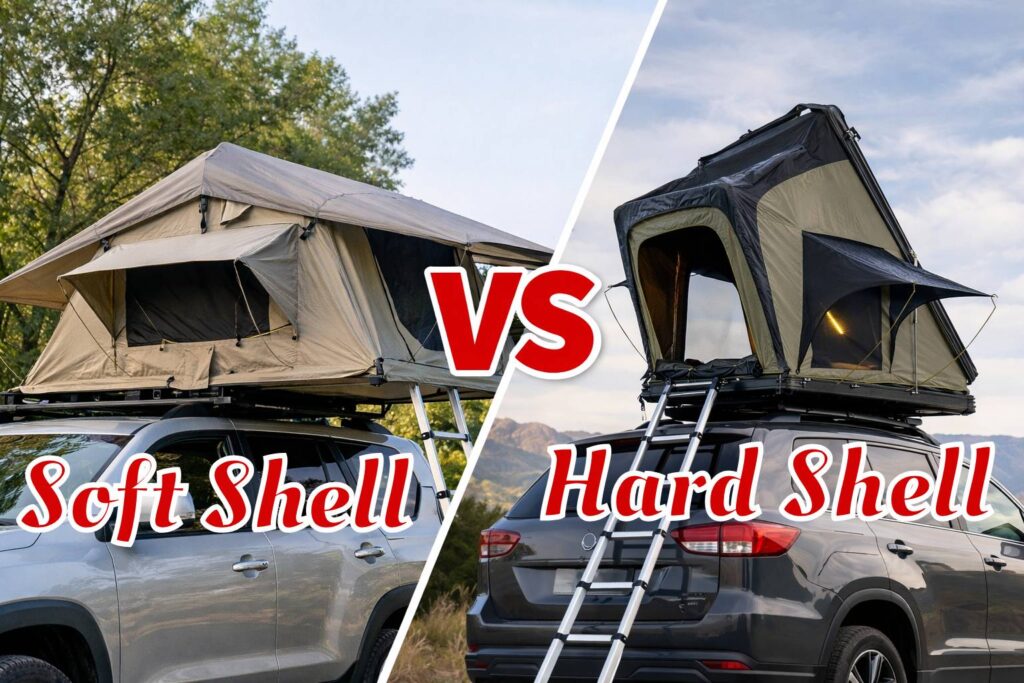
Recommended starting lineup:
Entry-level:
- Soft shell rooftop tents
👉 Lower price, easier to sell
Mid-range:
- ABS hard shell tents
👉 Balance between cost and performance
Premium:
- Aluminum hard shell rooftop tents
👉 High margin, strong demand
👉 Tip:
Start with a small but balanced product range.
Step 3: Find a Reliable Manufacturer
Your supplier is the foundation of your business.
What to look for:
- Real factory (not just trader)
- Export experience
- Stable quality
Why it matters:
- Consistent product quality
- On-time delivery
- Long-term cooperation
👉 A good supplier saves you time, money, and risk.
Step 4: Start with Small Orders
Many beginners make the mistake of ordering too much inventory.
Better approach:
- Start with low MOQ
- Test different models
- Understand customer feedback
👉 This helps you reduce risk and learn the market faster.
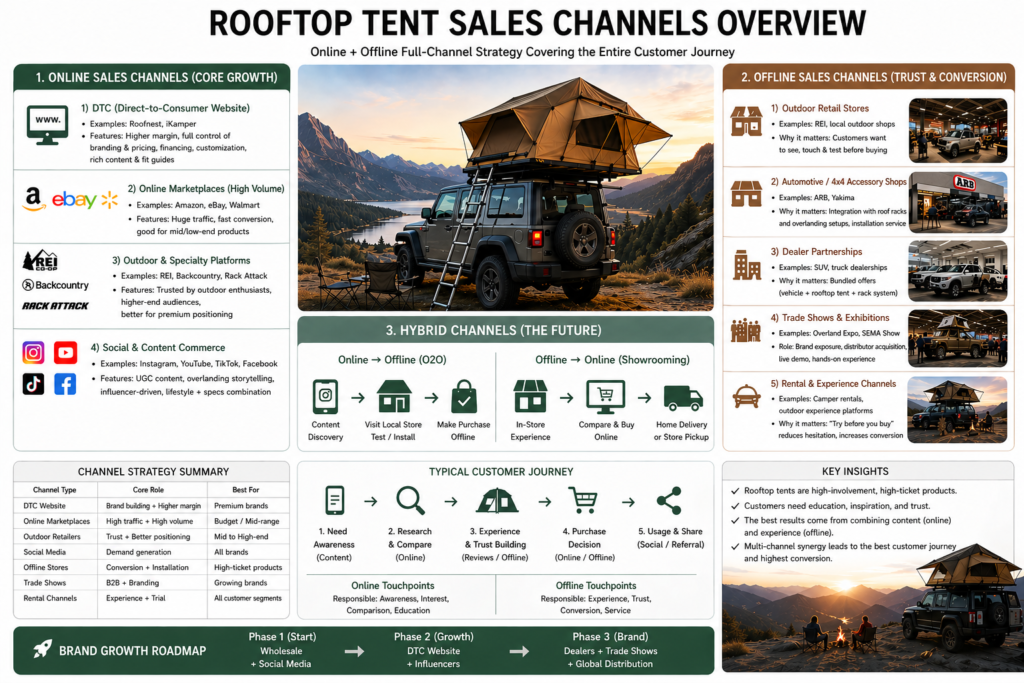
Step 5: Choose Your Sales Channel
You have several options to sell rooftop tents:
1. Online sales
- Shopify store
- Marketplace platforms
2. Offline distribution
- Local dealers
- Outdoor shops
3. Hybrid model
- Online + offline
👉 Most successful businesses combine multiple channels.
Step 6: Build Your Brand (Optional but Powerful)
Instead of just reselling products, many dealers are now building their own brands.
Benefits of branding:
- Higher profit margins
- Customer loyalty
- Market differentiation
What you can do:
- Add your logo
- Customize packaging
- Build a website
👉 Branding is the key to long-term success.
Step 7: Manage Logistics and Shipping
Rooftop tents are large products, so logistics planning is essential.
Key points:
- Use sea freight for bulk orders
- Work with experienced forwarders
- Plan storage space
👉 Good logistics = fewer problems + lower cost
Step 8: Scale Your Business
Once you validate your market, it’s time to grow.
How to scale:
- Increase order volume
- Expand product range
- Invest in branding
- Build partnerships
👉 Growth comes after validation—not before.
Common Mistakes to Avoid
❌ Ordering too much stock too early
❌ Choosing supplier based only on price
❌ Selling too many models at once
❌ Ignoring branding
👉 Focus on stability first, then growth.
Final Thoughts
Starting a rooftop tent business is a real opportunity in 2026—but success depends on:
- Choosing the right products
- Working with reliable manufacturers
- Starting small and scaling smart
👉 You don’t need to be big to start—you just need to start right.
📩 Need Help Starting Your Rooftop Tent Business?
We support new distributors with:
✔ Product selection guidance
✔ Flexible MOQ
✔ OEM & private label
✔ Export and logistics experience
👉 Contact us today for catalog and startup advice.

Pingback: OEM Rooftop Tent: How to Build Your Own Brand in 2026 (Step-by-Step Guide) – Star Island
Pingback: Is Rooftop Tent Business Still Profitable in 2026? (Market & Margin Analysis) – Star Island