Introduction
For outdoor equipment dealers, one common question is:
👉 Should I sell rooftop tents or traditional ground tents?
At first glance, ground tents seem easier to sell due to their lower price. However, the market is changing rapidly.
Rooftop tents—especially hard shell models—are gaining popularity worldwide and becoming a high-margin category for distributors.
In this guide, we’ll compare hard shell rooftop tents vs ground tents from a dealer’s perspective, focusing on:
- Profit margins
- Market demand
- Customer behavior
- Long-term business potential
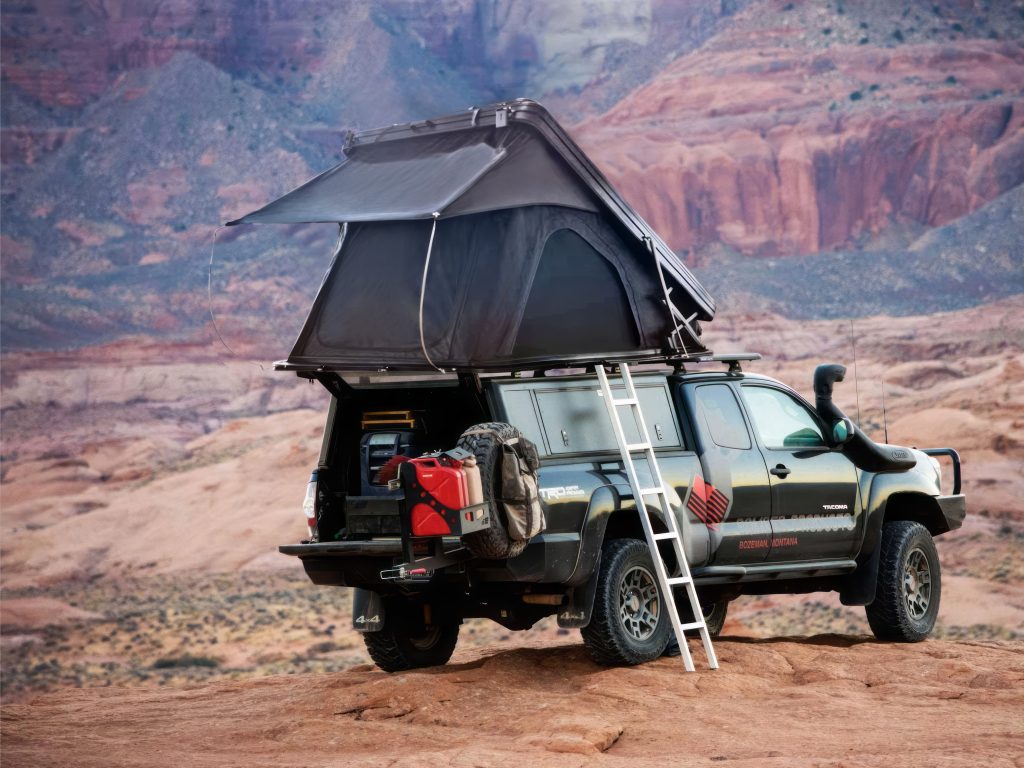
What Is a Hard Shell Rooftop Tent?
A hard shell rooftop tent is mounted on top of a vehicle and features a rigid outer shell (usually aluminum or ABS).
Key features:
- Fast setup (often within seconds)
- Compact and aerodynamic
- Durable structure
👉 These tents are popular among:
- Overlanding enthusiasts
- SUV and pickup owners
- Premium outdoor consumers
What Is a Ground Tent?
Ground tents are traditional camping tents set up on the ground.
Key features:
- Lightweight and portable
- Lower cost
- Wide availability
👉 They are commonly used by:
- Casual campers
- Budget-conscious buyers
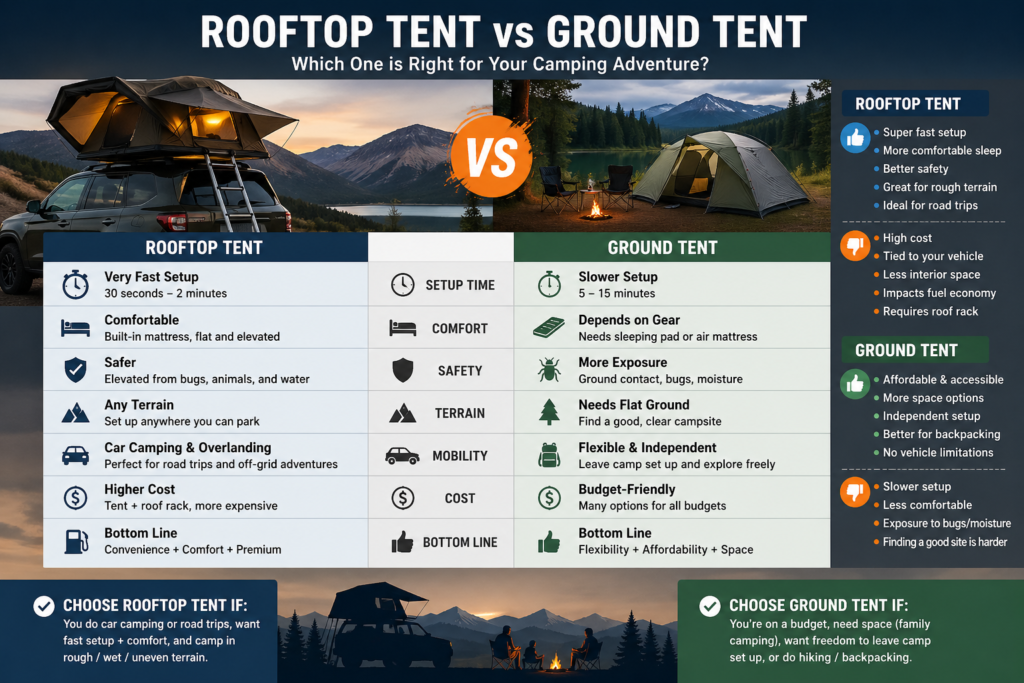
Key Comparison: Rooftop Tent vs Ground Tent
| Factor | Hard Shell Rooftop Tent | Ground Tent |
|---|---|---|
| Selling Price | High | Low |
| Profit Margin | High | Low |
| Setup Time | Very fast | Slower |
| Target Market | Premium | Mass market |
| Competition | Lower | Very high |
| Differentiation | Strong | Weak |
Why Rooftop Tents Are More Profitable
1. Higher Selling Price = Higher Margin
Rooftop tents are premium products.
👉 This means:
- Higher retail price
- Better profit per unit
2. Less Price Competition
Ground tents are widely available, leading to intense price competition.
👉 In contrast:
- Rooftop tents have fewer suppliers
- Customers focus more on quality than price
3. Stronger Brand Value
Rooftop tents are often associated with:
- Adventure lifestyle
- Overlanding culture
- Premium outdoor experiences
👉 This allows dealers to:
- Build brand identity
- Charge higher prices
4. Growing Global Demand
The rooftop tent market is expanding rapidly due to:
- Increase in SUV ownership
- Growth of road trips and overlanding
- Social media influence
👉 Ground tents, on the other hand, are already a saturated market.
When Ground Tents Still Make Sense
Despite the advantages of rooftop tents, ground tents still have their place.
Suitable scenarios:
- Entry-level customers
- Budget-focused markets
- Add-on product line
👉 Some dealers use ground tents to:
- Attract traffic
- Upsell rooftop tents
Best Strategy for Dealers
Instead of choosing one, smart dealers combine both.
Recommended structure:
Entry-level:
- Ground tents
- Soft shell rooftop tents
Mid-range:
- ABS hard shell rooftop tents
Premium:
- Aluminum hard shell rooftop tents
👉 This allows you to cover all customer segments.
What Is Changing in 2026?
1. Shift toward premium outdoor products
Customers are willing to pay for quality
2. Faster adoption of rooftop tents
Driven by overlanding trends
3. Decline in low-margin categories
Ground tents face heavy competition
👉 Dealers who adapt early gain an advantage.
Common Mistakes to Avoid
❌ Competing only on low price
❌ Ignoring premium product trends
❌ Selling undifferentiated products
❌ Not understanding customer segments
👉 Profit comes from positioning—not just volume.
Final Thoughts
Both rooftop tents and ground tents have their place—but from a business perspective:
- Ground tents = volume
- Rooftop tents = profit
👉 The real opportunity lies in building a product mix that maximizes both.
📩 Looking to Add Rooftop Tents to Your Product Line?
We manufacture:
✔ Hard shell rooftop tents (aluminum & ABS)
✔ Soft shell rooftop tents
✔ OEM & private label solutions
👉 Contact us today for catalog and pricing.
